Table of contents
Less waste, better margins.
Track sales, manage stock and make smarter purchasing decisions with YUMA EPOS for cafés.
Open the bin at the end of a busy Saturday and you can read the day. The sandwiches made for a lunch rush that never arrived. The croissants from the morning bake that nobody wanted by 3pm. The soup that went past its best.
None of it looks like much on its own. But over a month, it’s money you’ve already spent and can’t get back.
Food waste is a common challenge for independent cafés, but reducing it doesn’t have to mean complicated systems or hours of extra admin. A few changes to how you prepare, order and track your food can make a real difference.
Here’s where café food waste comes from, how to measure it and seven practical ways to keep more of what you buy out of the bin.
Where café food waste comes from
Most café food waste comes from four main areas.
Overproduction. Baking, prepping or making more than you’ll sell, usually because running out feels worse than throwing food away. It’s an understandable instinct, but an expensive one.
Poor forecasting. Ordering and preparing food based on gut feeling, without allowing for quieter weekdays, school holidays, changing weather or local events that affect footfall.
Inconsistent portions. A little extra on the plate here, an overfilled scoop there. It doesn’t always end up in the bin, but it quietly eats into your margins and makes stock run out sooner than expected.
Short shelf-life ingredients. Fresh milk, salad leaves, soft fruit, bread and pastries don’t forgive over-ordering. Buying in bulk to get a better price only works if you actually use what you’ve bought.
According to WRAP’s food waste research, food waste represents a significant financial and environmental challenge across the hospitality and food service sector. For smaller operators, understanding where waste occurs is the first step towards reducing it.
How to measure your café’s food waste
You can’t improve what you aren’t measuring, but tracking food waste doesn’t need to become another full-time job.
For two weeks, keep a simple waste log near the bin. Every time something gets thrown away, record three things:
- What it was: Sandwiches, pastries, milk, prepared ingredients or anything else.
- How much: The number of portions, approximate weight or quantity.
- Why: Over-prepared, past its use-by date, made incorrectly or returned by a customer.
The reason is particularly important because it helps you identify what’s causing the waste, rather than simply counting what gets thrown away.
Keep the process quick. A clipboard and pen that takes 30 seconds to complete is better than a complicated spreadsheet nobody uses.
At the end of each week, review the results. Which three items are costing you the most? Are certain products regularly left over? Does most of your waste happen on particular days?
If possible, add the approximate ingredient cost of each wasted item. That gives you a clearer picture of how much money is going into the bin.
For more structured guidance, the Guardians of Grub programme, developed by WRAP, provides practical resources to help hospitality businesses measure and reduce food waste.
Seven ways to reduce café food waste
You don’t need to completely overhaul your kitchen to reduce waste. These seven changes can help you make better use of your ingredients, improve preparation and avoid unnecessary costs.
1. Prep to demand, not to panic
It’s tempting to prepare extra food just in case you get busy, but that approach can leave you with unsold products at the end of the day.
Set preparation targets for your most popular items based on the day of the week and your previous sales.
If Mondays are consistently quieter than Saturdays, your preparation levels should reflect that.
Review these targets regularly and adjust them as you learn more about customer demand.
2. Bake and prepare in smaller batches
Rather than preparing everything first thing in the morning, consider whether some products could be made in smaller batches throughout the day.
For example, baking a smaller quantity of pastries later in the morning might help you avoid having too many left over at closing time.
It can also mean fresher products for customers.
This won’t work for every item or kitchen, but where preparation times allow, smaller batches can give you more flexibility.
3. Give suitable ingredients a second life
Some ingredients and unsold products can be used in other dishes rather than being discarded.
Bread ends could become croutons or breadcrumbs, while suitable surplus fruit might be used for smoothies or compotes.
You could also introduce a daily special that makes use of ingredients you already have.
However, food safety must always come first. Only reuse ingredients that have been stored correctly, remain safe to eat and are within their use-by dates. Never use food past its use-by date.
The Food Standards Agency’s guidance on food date labelling explains the important difference between use-by and best-before dates.
4. Use ingredients across multiple menu items
If an ingredient only appears in one dish, it can be difficult to use up before it goes off.
Look for opportunities to use the same fresh ingredients across several menu items.
For example, spinach might feature in a breakfast wrap, a lunchtime sandwich and a salad.
This can make stock ordering simpler, reduce the number of ingredients you need to hold and give you more flexibility when demand changes.
Just make sure you’re creating menu combinations customers actually want, rather than adding dishes purely to use up ingredients.
5. Standardise your portions
Inconsistent portions can quietly increase food costs.
An extra handful of cheese or an oversized scoop of filling might not seem significant, but repeated across hundreds of orders, those additional ingredients add up.
Use portion guides, measuring scoops, scales or marked containers to help your team prepare food consistently.
This can also improve the customer experience by making sure people receive the same quality and quantity each time they visit.
6. Rotate your stock properly
Good stock rotation helps prevent ingredients from being forgotten at the back of the fridge.
Use a first-expiring, first-out approach, making sure ingredients with the earliest safe use-by dates are used first.
Label prepared food clearly, check dates regularly and organise storage so staff can easily see what needs using.
A quick fridge and stockroom check each morning can help catch problems before food has to be thrown away.
7. Offer an end-of-day deal
If you regularly have suitable unsold food at closing time, consider offering a reduced-price bundle during your final hour of trading.
This could include pastries, sandwiches or other products that are still safe to sell but unlikely to be suitable for sale the following day.
You could promote the offer on your social media channels, display it on a specials board or use a surplus food platform such as Too Good To Go.
Just make sure the discounted price still makes commercial sense and doesn’t encourage customers to routinely delay purchases until the end of the day.
How sales and stock data can help reduce waste
A lot of café food waste comes down to forecasting. And forecasting becomes easier when you have a clearer picture of what customers are actually buying.
Your sales data can show which products sell best, what times you’re busiest and how demand changes throughout the week.
Compare that information with what you’re preparing, and patterns start to emerge.
Perhaps you’re consistently making too many sandwiches on Tuesdays, but running out of croissants by 10am on Saturdays.
Those insights can help you adjust preparation quantities and avoid unnecessary waste.
Stock data is just as useful.
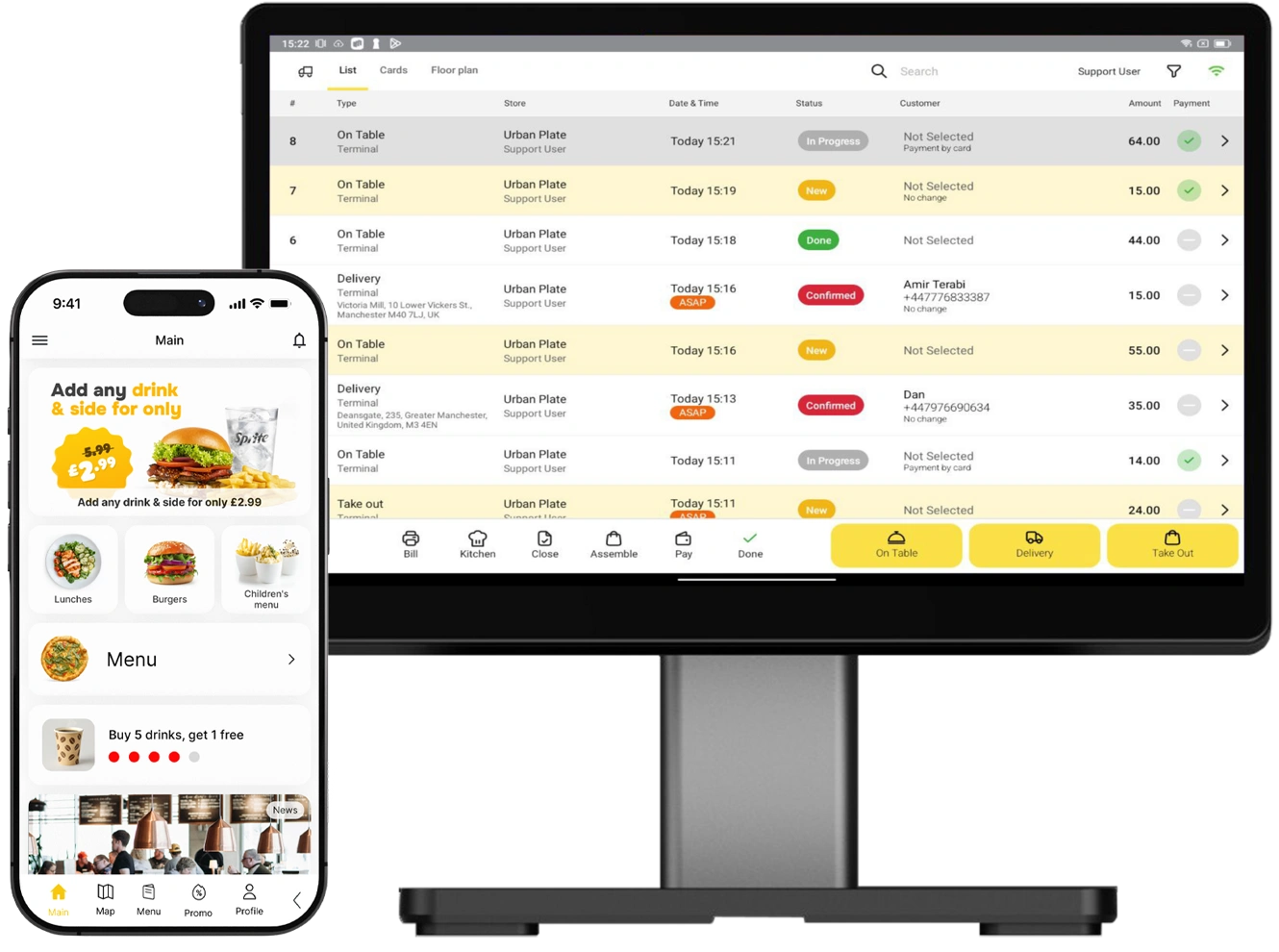
With YUMA EPOS for cafés, stock management and sales reporting tools can help you track inventory, monitor product performance and understand how stock is being used.
Automatic stock deductions linked to sales can make it easier to keep records up to date, while low-stock alerts help you identify when ingredients need replenishing.
By comparing what you’re selling with what you’re buying and using, you can make more informed decisions about stock levels and ordering quantities.
That means less guesswork, fewer unnecessary purchases and more of what you buy ending up on a customer’s plate instead of in the bin.
Food waste also has a direct impact on profitability. Every ingredient you purchase but don’t sell increases your costs without generating revenue.
If you want to understand how these costs affect your business, read our guide to calculating your café’s profit margins.
Where to start
Reducing food waste doesn’t mean you need to implement every change overnight.
Start with something simple.
Keep a waste log for two weeks, identify the three items you’re throwing away most often and work out why they’re being wasted.
From there, choose one or two changes that could make the biggest difference.
Maybe it’s preparing fewer sandwiches on quieter days, ordering smaller quantities of fresh ingredients or introducing a more consistent portioning system.
Small improvements can add up over time, helping you reduce costs without compromising the quality of your food or the experience you provide.
And with better visibility over your sales and stock, you’ll have the information you need to keep improving.
Take control of your café’s stock and costs
Track sales, manage inventory and make more informed decisions with YUMA EPOS for cafés.