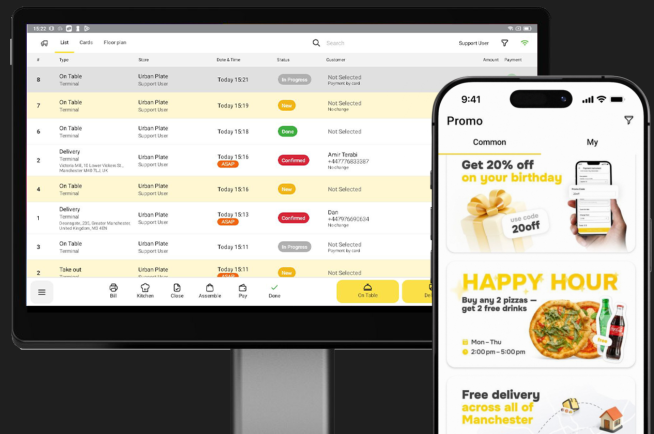
Almost all of UK hospitality is small business — House of Commons Library research, citing ONS data, puts small businesses at 97.7% of the roughly 170,000 hospitality businesses in the UK. Yet a huge amount of hospitality software marketing talks as if every business is either a single struggling café or a national chain, with nothing in between. In reality, what actually matters shifts as you grow — and knowing what stage you’re at helps you avoid paying for capability you don’t need yet, or outgrowing a system before you should have to.
Solo or single-site: Keep it simple, keep it fast
What matters most:
- Speed of order-taking and payment — every extra second at the till matters more when you’re doing it all yourself
- Simple, reliable reporting — a clear daily total, not a dashboard full of metrics you’ll never look at
- Low setup effort — you don’t have time for a complicated rollout
What can genuinely wait:
- Multi-site reporting (obviously)
- Complex staff permission structures
- Advanced marketing automation — a simple loyalty scheme is plenty for now
Small team, one site: Consistency starts to matter
What matters most:
- Shared logins and consistent pricing — once more than one person is on the till, “everyone just knows the prices” stops being reliable
- Basic staff management — clocking in/out, simple permissions, without needing a full HR system
- Stock tracking that updates automatically — manual counts get harder to keep accurate as order volume grows
- Online ordering that connects to the till, if you’re taking orders beyond the counter
What can genuinely wait:
- Centralised multi-site menu control
- Enterprise-level compliance/reporting features built for head office structures you don’t have yet
Growing toward multiple sites: The priorities shift again
What matters most:
- Centralised back office — one place to manage menus, pricing and reporting across every site, not five separate logins
- Site-by-site performance comparison — spotting which location needs attention without manually reconciling numbers
- Standardisation without losing flexibility — consistent pricing and branding, while still allowing for local menu differences
- A support relationship that scales with you, not one built only for a single till
What can genuinely wait: honestly, not much — once you’re actively opening or planning a second site, the earlier “wait and see” items above generally need addressing.
The takeaway
There’s no universal answer to what hospitality software “should” include — it depends entirely on where your business actually is right now. The mistake worth avoiding isn’t picking the wrong system outright; it’s picking one built for a size you’re not yet at (and paying for complexity you don’t need), or one built for a size you’ve already outgrown (and hitting a wall at the worst possible moment). If you’re not sure which tier describes you, the honest test is simple: are today’s tools still keeping up with today’s business, or are you already working around them?
Whether you’re a single site or planning your next one, YUMA scales with you — book a demo and we’ll talk through where you actually are.