Table of contents
Keep your kitchen running smoothly
Send orders straight to the kitchen, reduce mistakes and help your team serve guests faster with YUMA KDS.
Search “best EPOS system UK” and you’ll get a wall of listicles ranking providers against each other on price, features and star ratings. The trouble is, “best” isn’t a fixed answer — it depends entirely on what your business actually needs it to do. A system that’s genuinely excellent for a fifty-cover restaurant can be overkill for a two-person bakery, and vice versa.
So rather than hand you another ranked list, here’s what independent hospitality operators should actually be judging an EPOS system against — the criteria that separate a good fit from a good sales pitch.
1. Does it actually connect, or just coexist?
Plenty of systems claim to be “all-in-one” while quietly running your till, your online ordering, your reporting and your marketing as separate products bolted together under one brand name. The test isn’t whether a provider offers all these things — it’s whether a single sale updates all of them automatically, without someone re-entering data by hand.
Ask any provider directly: if I take an order online, does it show up in the same reporting as an order taken at the till, in real time, with no manual step in between?
2. Is it built for hospitality, or adapted for it?
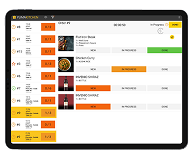
A lot of EPOS software started life in retail and was adjusted to fit hospitality afterwards. It shows up in small but constant frictions — course timing that doesn’t work properly, till layouts built for barcodes rather than menus, kitchen tickets that weren’t really designed for a busy pass. Systems built specifically for hospitality, with things like a proper kitchen display system and quick-service workflows, tend to feel noticeably less clunky under real service pressure.
3. Does the pricing tell you the whole story upfront?
“Best” often loses to “cheapest-looking” — until the hidden costs show up: hardware fees, payment processing rates, contract length, or charges for features that turn out not to be included after all. A genuinely good fit is one where you can see the full cost of ownership before you sign anything, not just the headline monthly price.
4. Does it scale with you, or do you have to start again?
If there’s any chance you’ll open a second site, it’s worth checking now rather than later. Some systems handle a single location well but fall apart the moment you need multi-site reporting or centralised menu control. Moving providers because you outgrew the first one is expensive and disruptive — worth avoiding if you can see it coming.
5. What happens when something goes wrong?
Every EPOS system will have an issue eventually — a payment that doesn’t go through, a printer that stops responding, a busy Saturday night where something needs fixing fast. “Best” providers are judged less by whether problems happen and more by what support looks like when they do: is it a UK-based team who understands hospitality, or a ticket queue and a chatbot?
6. Does it help you bring customers back, not just take their money?
A system that stops at processing payment is doing half the job. The more useful ones build a picture of your customers automatically and let you turn that into repeat business — loyalty schemes, targeted offers, customer marketing — without needing a separate platform on top.
Putting the criteria to work
None of this means ignoring price or reviews — they matter. But they’re a starting point, not the whole answer. The independent operators who end up happiest with their choice are the ones who went in with a clear list of what actually matters to their business, then judged every provider against it consistently, rather than being swayed by whoever pitched the loudest.
If you want a quick gut-check: pick the criterion above that would cause you the most pain if it went wrong, and start your evaluation there.
Want to see how YUMA holds up against this list? Book a demo and judge it for yourself.