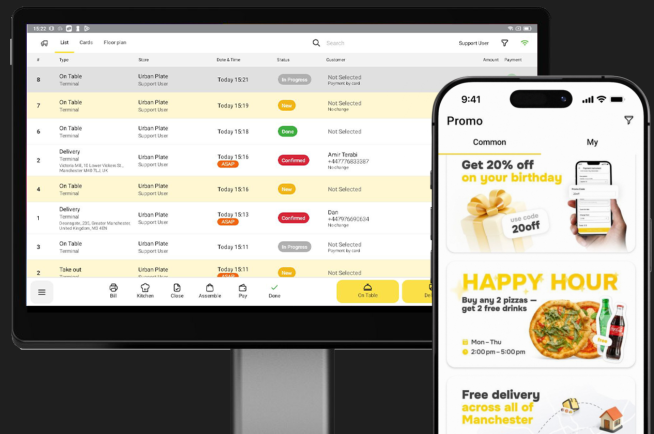

The hospitality industry continues to evolve rapidly as guest expectations shift, competition intensifies, and operational challenges grow. Modern EPOS systems are no longer just digital cash registers. Instead they sit at the centre of the dining experience, connecting orders, payments, guest engagement, analytics, inventory and more into a unified technology platform.
As we move through 2026, several technology trends are shaping how restaurants, bars, cafés and multi-site operators run their businesses and keep customers returning.
In this post, we explore the most impactful innovations in EPOS technology, from artificial intelligence and mobile ordering to real-time analytics and advanced loyalty, and what they mean for hospitality operators today.
Mobile Ordering and Contactless Guest Experiences
Mobile and digital ordering are now central to guest expectations. Today’s diners value speed, convenience and control – and mobile ordering delivers all three.
Mobile Ordering Adoption
Recent insights show that almost half of consumers prefer to order directly from a restaurant’s app or website, with mobile and contactless options significantly speeding up service and reducing errors.
QR-Based and Seamless Ordering
Contactless dining is now commonplace in many markets. QR-enabled menus and order-and-pay experiences allow guests to browse, customise, order and pay straight from their phones – reducing pressure on busy service teams.
Integrated Platforms
EPOS systems that integrate mobile ordering directly into workflows (including kitchen management and payment processing) remove duplicate tasks and ensure accuracy – even during peak periods. Many restaurants now connect their EPOS to third-party and direct mobile ordering systems to centralise operations.
What this means for EPOS:
Mobile ordering is no longer an add-on – it’s essential. To deliver a seamless experience, EPOS systems must natively support mobile and contactless guest journeys.
Real-Time Analytics: Making Data Actionable
The shift from reporting after the fact to real-time insights is one of the most profound transformations in EPOS technology.
Operational Visibility
Cloud-based EPOS platforms synchronise sales, inventory and customer data across devices and sites, giving operators a real-time view of performance. This visibility allows teams to respond instantly to trends, adjust pricing, open or close prep stations, and manage staff more effectively.
Guest Insights and Trends
Advanced analytics help restaurants understand what sells when and why – from identifying peak hours to tracking guest preferences. By turning raw EPOS data into meaningful insight, operators can tailor staffing, menu engineering and promotions for better outcomes.
Unified Reporting Across Channels
EPOS systems that tie together on-site transactions, mobile orders, promotions and loyalty data make it easier for operators to spot opportunities and issues across the business – without manual cross-checking or spreadsheets.
What this means for EPOS:
Real-time analytics are becoming indispensable, offering both high-level views for owners and granular insights for managers on shift.
Loyalty and Personalisation: Building Repeat Business
Guest retention is critical in hospitality, and EPOS systems are increasingly central to how loyalty and personalisation are delivered.
Integrated Loyalty Programmes
Loyalty features embedded in EPOS systems (tracking spend, visits and preferences) help restaurants create meaningful reward programmes. When loyalty data is connected directly to the POS, promotions become automated and personalised, driving repeat visits.
Behavioural Insights
By analysing purchase patterns, restaurants can deliver targeted incentives – such as tailored discounts or timed offers – instead of generic promotions. This drives both customer satisfaction and lifetime value.
Social and Digital Engagement
Loyalty programmes that link with social platforms and mobile channels enable restaurants to meet guests where they are – increasing visibility and enhancing engagement across digital touchpoints.
What this means for EPOS:
Loyalty systems within the EPOS ecosystem help operators capture more value from each guest, turning one-off visits into long-term patronage.
Cloud-First Platforms and Integration
Cloud technology continues to lead the evolution of EPOS systems.
Unified Management Across Sites
Cloud-based EPOS solutions allow operators to update menus, pricing and features across multiple sites from a central dashboard – simplifying control and ensuring consistency.
Anywhere Access and Updates
Cloud platforms also enable remote access to data and automated software updates. Restaurant owners and managers can monitor performance from anywhere and ensure the system is always up to date without manual IT work.
Seamless Integrations
Modern cloud EPOS platforms integrate with kitchen displays, online ordering programmes, inventory and accounting systems – eliminating data silos and delivering cohesive workflows.
What this means for EPOS:
Cloud systems aren’t just more flexible – they are foundational to how future EPOS platforms operate, scale and adapt to new innovations.
Self-Service and Smart Ordering Interfaces
Self-service technologies like digital kiosks and QR ordering have expanded beyond novelty to operational necessity.
Customer-Centric Ordering
Self-service interfaces empower guests to order at their pace, reducing queues and freeing staff to focus on service. Recent industry analysis highlights how mobile and kiosk ordering are key trends for QSRs and restaurants alike.
Personalised Digital Menus
The next generation of self-service platforms will provide dynamic menus and contextual suggestions based on time of day, guest preferences and loyalty history – increasing guest satisfaction and spend.
What this means for EPOS:
EPOS systems of the future must support and enhance these smart ordering pathways, ensuring orders flow efficiently into kitchen and fulfilment operations.
AI and Machine Learning: Turning Data Into Decisions
Artificial intelligence (AI) is transforming hospitality EPOS systems by bringing predictive intelligence, automation and personalised experiences into daily operations.
Smarter Decision-Making
AI-powered tools help operators forecast demand, optimise staffing, anticipate stock needs and spot operational trends that humans might miss. For example, data shows that many restaurant operators see real-time consolidated data as essential for faster decisions on busy shifts, proving that intelligence – not just information – improves agility.
Personalisation and Guest Engagement
AI also powers more personalised experiences. Recommendation engines can suggest dishes or offers based on past behaviour, boosting average order values and guest satisfaction. Industry research indicates that tailored suggestions can increase average spend by a meaningful margin when guests feel understood.
Inventory and Demand Forecasting
AI models help restaurants manage inventory more intelligently – reducing waste, improving prep planning and maintaining margins. Nearly half of restaurants using advanced analytics are leveraging these insights to streamline operations.
What this means for EPOS:
AI integration will increasingly be a baseline expectation, not a luxury feature. Systems that turn POS data into operational insight – automatically and in real time – will give operators a competitive edge.
Conclusion: EPOS as the Central Nervous System of Hospitality
The future of hospitality EPOS is rooted in connectivity, intelligence and guest-centric design. As we progress in 2026 and beyond, the systems that thrive will be those that:
- Turn data into real-time, actionable insight
- Support seamless mobile and contactless guest experiences
- Embed loyalty and personalised engagement directly into operations
- Unify multiple touchpoints through cloud and integrated platforms
EPOS is no longer just a tool for processing payments – it is a strategic platform that drives efficiency, growth and guest loyalty.
By embracing these trends, hospitality operators can ensure they not only meet today’s expectations but are also well positioned for the evolving demands of tomorrow’s guests.
Want to stay ahead with a future-ready EPOS? Explore how Yuma’s all-in-one hospitality platform helps operators serve faster, manage smarter and grow stronger.